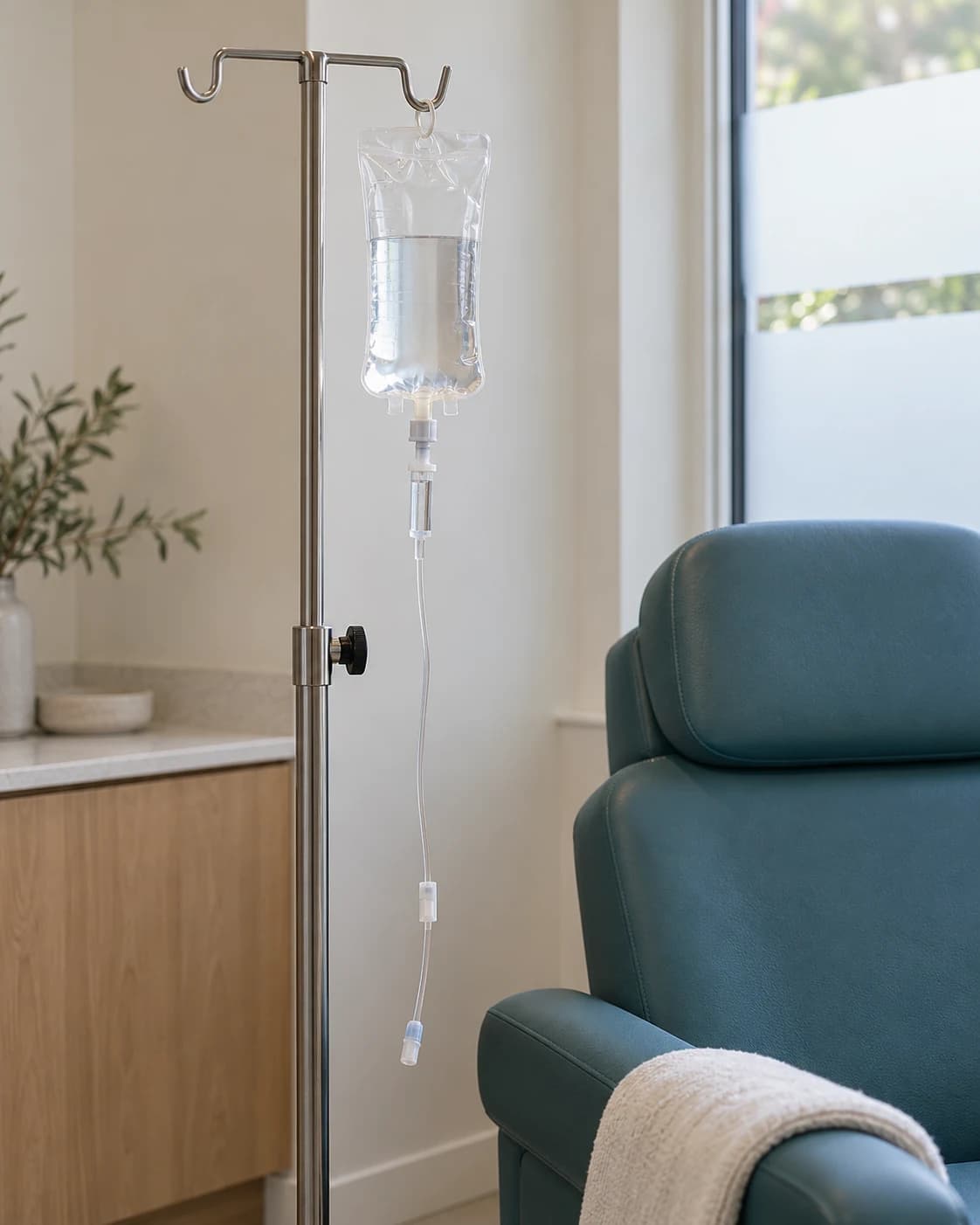
What the treatment involves
An IV infusion is given through a small cannula placed in a vein, usually in the arm or the back of the hand. Whether an infusion is appropriate at all, and what it would contain, is decided individually by a suitably qualified prescriber after assessing your health. Many injectable products are prescription-only medicines, which by law cannot be advertised to the public, so we do not list them here.
This page does not describe any health or cosmetic effect. IV therapy is not a substitute for medical advice or treatment, and if you have symptoms or a health concern you should speak to your GP or NHS 111 — or call 999 in an emergency.
Who may be suitable
- Adults aged 18 or over who would like to discuss IV therapy and are willing to provide a full medical history, including any medicines and allergies, and to have any further assessment the prescriber considers necessary.
- People who understand that the prescriber may decide an infusion is not appropriate, and may recommend speaking to their GP instead.
- Suitability is always decided in person by a prescriber after a medical assessment.
When it may not be suitable
- IV therapy is not offered to anyone under 18.
- It may not be appropriate for people with certain heart, kidney or liver conditions, blood-clotting problems or other medical conditions, people taking certain medicines, anyone with a history of reactions to the substances proposed, or during pregnancy or breastfeeding. The prescriber will discuss this with you.
Potential benefits
- Medical screening comes first: a prescriber reviews your health, medicines and allergies before any infusion is considered, and you may be advised not to proceed.
- If an infusion goes ahead, it is given by an appropriately qualified clinician, who will explain each step and answer your questions.
- Nothing is chosen from a set menu: if an infusion is prescribed, its content is decided for you individually, based on your assessment.
What to expect
Your consultation covers your medical history, medicines, allergies and any further checks the prescriber requires, together with a discussion of risks and alternatives. You will have time to consider the information before deciding.
If an infusion is prescribed and you choose to go ahead, a cannula is placed in a vein and the infusion is given gradually while you rest in the clinic. You can ask for it to be stopped at any time.
You will be given written aftercare information and details of how to contact the clinic.
Recovery and aftercare
- Mild tenderness or bruising where the cannula was placed is common and usually settles over a few days.
- Your clinician will advise on caring for the cannula site afterwards.
- Call 999 if you develop difficulty breathing, swelling of the face, lips, tongue or throat, chest pain or a widespread rash. Contact the clinic or seek medical advice promptly if the cannula site becomes increasingly painful, red, hot or swollen, if a red line spreads along the arm, or if you develop a fever.
Your practitioner will give you aftercare advice specific to your treatment, which may differ from the general guidance above.
Results and longevity
We do not make claims about the effects of IV therapy. The evidence for many uses of IV infusions in people who are otherwise well is limited.
If you are considering IV therapy for a particular reason, the prescriber will discuss whether it is appropriate and what the alternatives are — including speaking to your GP, or not having treatment.
Individual results vary.
Risks and side effects
- Common: discomfort, bruising or minor bleeding where the cannula is placed, and feeling light-headed or faint.
- Less common: inflammation of the vein (phlebitis), fluid leaking into the surrounding tissue causing swelling and pain, or infection at the cannula site.
- Rare but serious: a severe allergic reaction (anaphylaxis), a bloodstream infection, a blood clot, or an air bubble entering the vein. Some people, particularly those with heart or kidney conditions, can be harmed by too much fluid or by changes in the body's salt balance, and some substances can interact with medicines or existing conditions.
- The prescriber will discuss the risks that apply to you, and to any substance proposed, before you consent.
If you experience severe or worsening pain, skin colour changes, changes in your vision or difficulty breathing after any treatment, seek urgent medical help (call 999) and contact the clinic.
Pricing
Consultation required for an individual treatment plan.
The cost of treatment depends on your assessment and the plan agreed. Your practitioner will explain all costs before you decide whether to go ahead. See our full price list.
Common questions
What is in an IV infusion?
That is decided individually by a prescriber after assessing you. Many injectable products are prescription-only medicines, which by law cannot be advertised to the public, so we do not list them on this website. If an infusion is proposed, the prescriber will explain exactly what it contains, why, and the alternatives.
Do I need a consultation first?
Yes. A medical assessment by a prescriber is needed before any infusion. Treatment is never assumed, and you may be advised that IV therapy is not appropriate for you.
Can IV therapy treat a health condition?
IV therapy at the clinic is not offered as a treatment for any illness or medical condition. If you have symptoms or a health concern, please speak to your GP or call NHS 111. In an emergency, call 999.
This information is general and is not a substitute for a consultation. Suitability for treatment is decided by the practitioner after an individual assessment, and individual results vary.