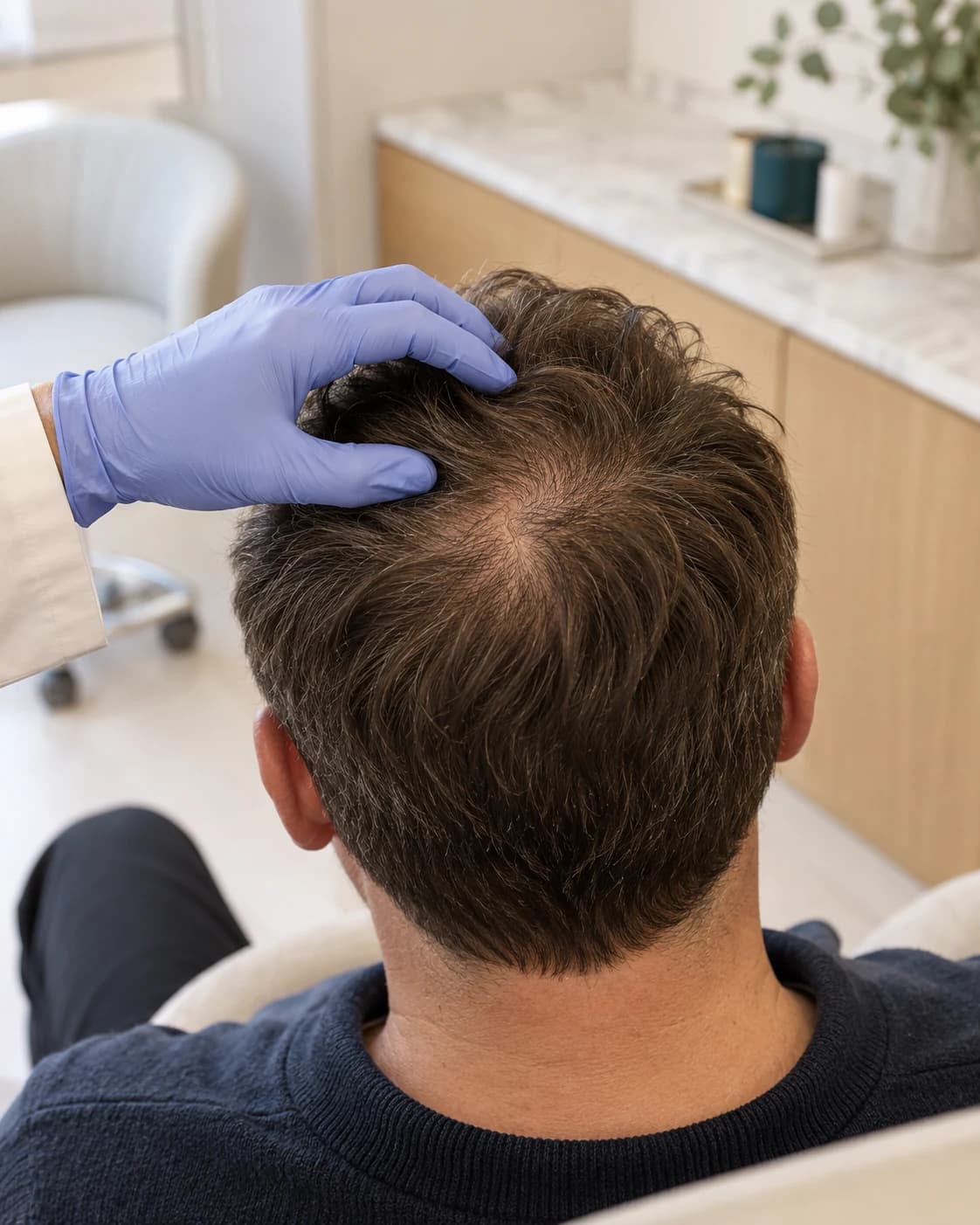
What the treatment involves
Possible causes of hair thinning include inherited pattern hair loss, hormonal changes, stress or illness, low iron or thyroid problems, some medicines, scalp conditions, and tension from tight hairstyles such as braids, weaves or extensions. Because some causes need medical investigation and treatment — and some can lead to lasting hair loss if not treated promptly — understanding the likely cause comes first.
Where appropriate, your practitioner may discuss injectable scalp treatments, in which a product containing ingredients such as peptides is injected in small amounts into the scalp. The evidence for these treatments is limited and still developing; they are not a cure for hair loss and cannot be relied on to regrow hair. Your practitioner will explain the product they propose, what is and is not known about it, and the alternatives — including medical treatment through your GP or a dermatologist, or not having treatment.
Who may be suitable
- Adults aged 18 or over who are concerned about hair thinning or shedding and would like an assessment and a discussion of their options.
- People who are willing to see their GP or a dermatologist if the assessment suggests a medical cause, and who have realistic expectations about what treatment can achieve.
- Suitability is always confirmed in person after an assessment of your hair and scalp and a review of your medical history.
When it may not be suitable
- Hair restoration treatment is not offered to anyone under 18. Sudden, patchy or rapidly worsening hair loss, hair loss with scalp pain, redness, scaling or scarring, or hair loss alongside other symptoms such as tiredness or weight change, should be assessed by a GP or dermatologist first.
- Injectable scalp treatments may not be appropriate during pregnancy or breastfeeding, with active infection or inflammation of the scalp, with bleeding disorders or blood-thinning medicines, or with certain other medical conditions or medications. Your practitioner will discuss this with you.
Potential benefits
- A structured assessment of your hair and scalp, with the aim of identifying likely contributing factors and whether you should see your GP or a dermatologist first.
- Honest advice about all the options, including medical treatment elsewhere and not having treatment at the clinic.
- If an injectable scalp treatment is agreed, your progress is reviewed rather than assumed, so you can make an informed decision about whether to continue.
What to expect
Your consultation covers the pattern and timing of your hair loss, your general health, medicines, diet and family history, an examination of your hair and scalp, and a discussion of options, risks, alternatives and costs. You will have time to consider the information before deciding.
If an injectable treatment is agreed, the scalp is cleansed and the product is injected in small amounts across the treatment area with a fine needle. Scalp injections can be uncomfortable, and your practitioner will discuss ways to make you more comfortable.
You will be given written aftercare information and details of how to contact the clinic.
Recovery and aftercare
- Tenderness, redness, swelling, small bumps and pinpoint bleeding at the injection points are common and usually settle over the following days.
- Your practitioner will advise when you can wash your hair and use styling products, and when it is suitable to have chemical treatments such as colouring or relaxing, or tight styles.
- Contact the clinic promptly if you notice increasing pain, swelling, warmth, discharge, a fever or skin colour changes on the scalp, as these require urgent assessment.
Your practitioner will give you aftercare advice specific to your treatment, which may differ from the general guidance above.
Results and longevity
Hair grows slowly, so any change takes months rather than weeks to assess.
Evidence for injectable 'hair peptide' treatments is limited. Some people may notice a change in the appearance of their hair; others notice little or none, and treatment does not address every cause of hair loss. Your practitioner will explain what is known for the product proposed — no outcome can be guaranteed.
Individual results vary.
Risks and side effects
- Common: discomfort, tenderness, redness, swelling, small bumps or pinpoint bleeding at the injection points, and headache, usually short-lived.
- Less common: bruising, lumps, infection, or an allergic or inflammatory reaction to an ingredient in the product.
- Rare but serious: severe infection, a severe allergic reaction, product entering a blood vessel and damaging the skin of the scalp, or inflammation that leads to scarring or patchy hair loss in the treated area.
- Your practitioner will discuss the risks that apply to you and the specific product before you consent.
If you experience severe or worsening pain, skin colour changes, changes in your vision or difficulty breathing after any treatment, seek urgent medical help (call 999) and contact the clinic.
Pricing
£300- Exosomes – microneedling — Hair£300
Injectable scalp treatments and any other options are priced at your consultation.
The cost of treatment depends on your assessment and the plan agreed. Your practitioner will explain all costs before you decide whether to go ahead. See our full price list.
Common questions
Will this stop my hair loss?
No treatment can be guaranteed to stop hair loss or regrow hair. The most important first step is understanding the likely cause, which may need medical investigation. Your practitioner will be honest about what injectable scalp treatments can and cannot do.
Do I need to see my GP first?
Not always. But if your assessment suggests a medical cause — or your hair loss is sudden, patchy, painful or accompanied by other symptoms — we will recommend that you see your GP or a dermatologist before considering treatment at the clinic.
Can my hairstyle affect hair loss?
Yes, it can. Repeated tension from tight styles, braids, weaves or extensions can contribute to hair loss around the hairline. We will talk about this at your assessment and, where relevant, suggest changes that may help.
This information is general and is not a substitute for a consultation. Suitability for treatment is decided by the practitioner after an individual assessment, and individual results vary.